How SotaDocs Handles Private Code Securely
A security-focused overview of how private code should be handled in documentation tools and the controls SotaDocs emphasizes.
- securityprivate-codecomplianceai-agents
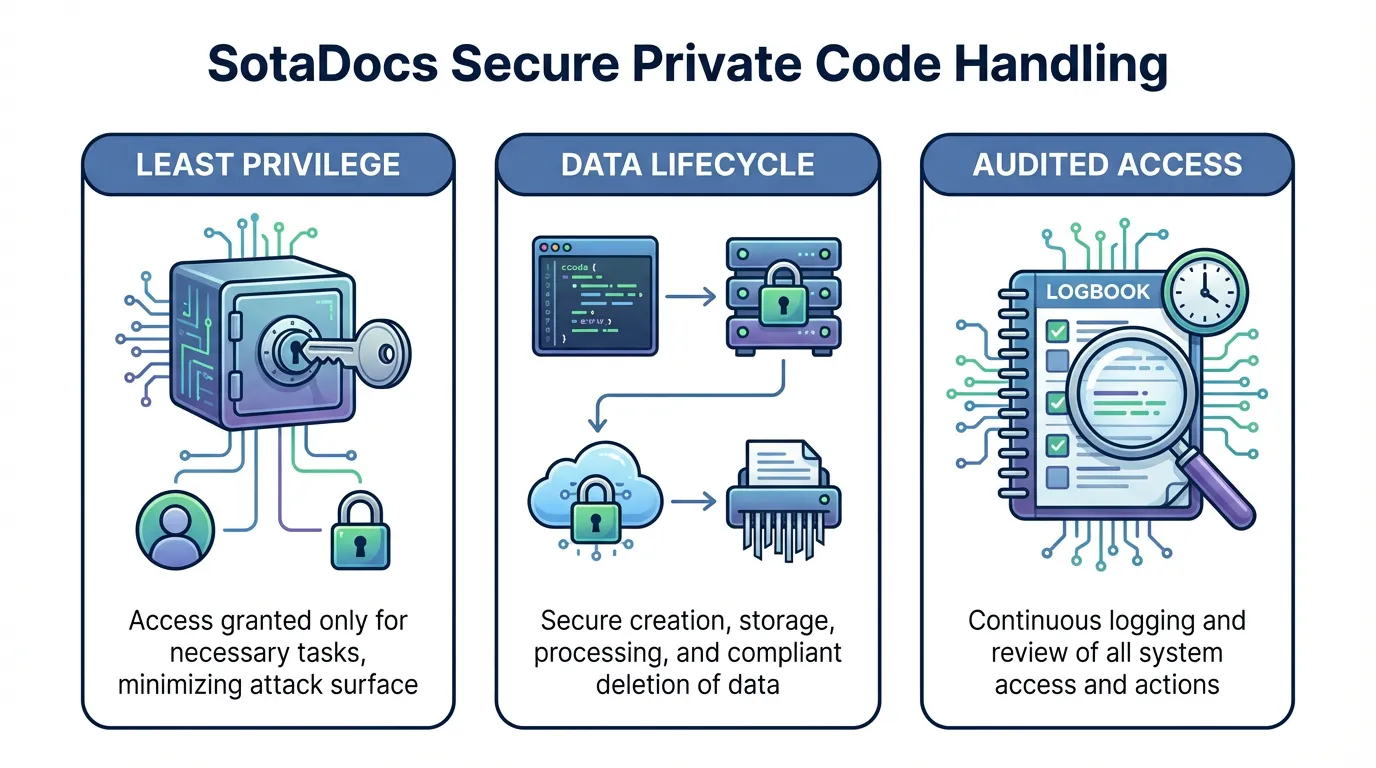
Private code is sensitive by default. A documentation tool should treat it with the same rigor you apply to production systems. This article explains the security controls that matter most and how SotaDocs is designed to align with them.
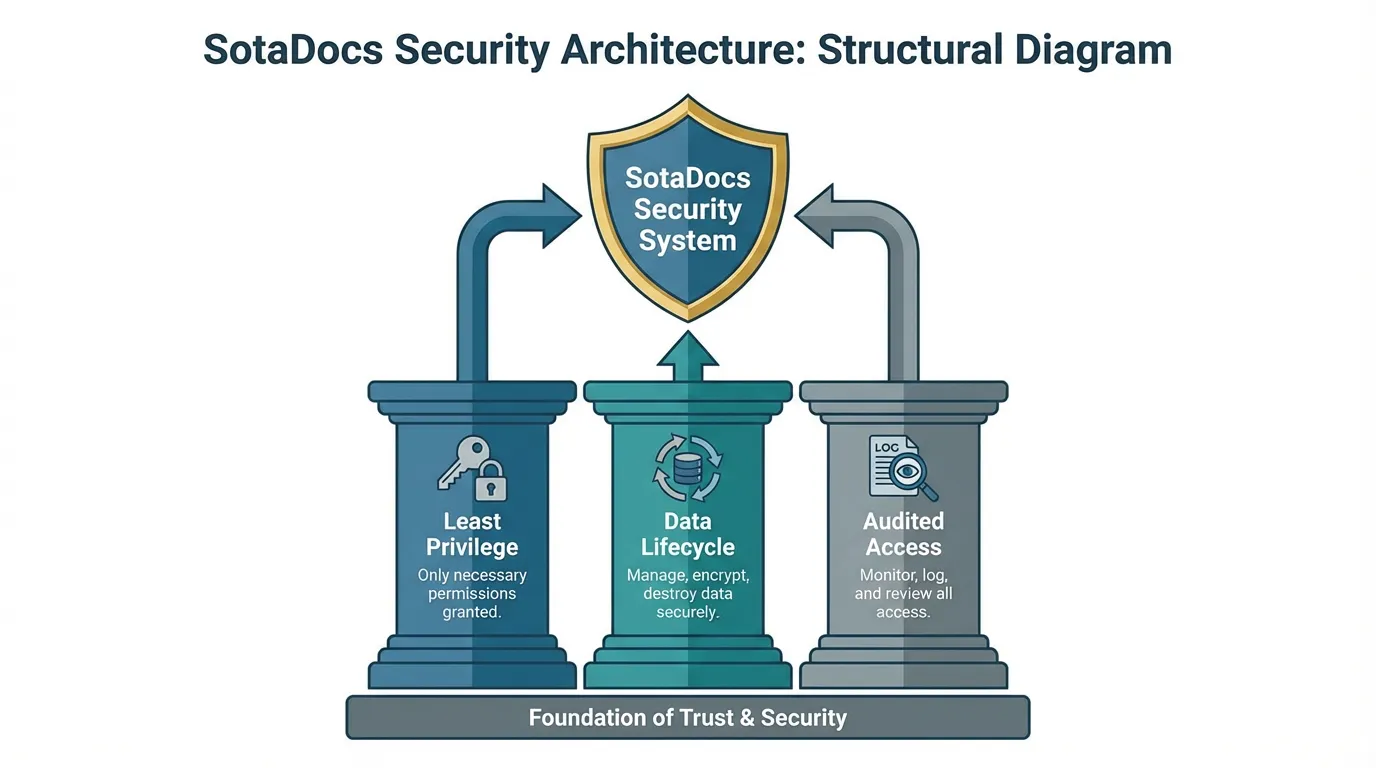
Direct answer: Secure handling of private code depends on least privilege, clear data lifecycles, and audited access. Define how code is ingested, stored, and deleted, then review permissions regularly. This reduces risk while keeping workflows usable for teams over time at scale.
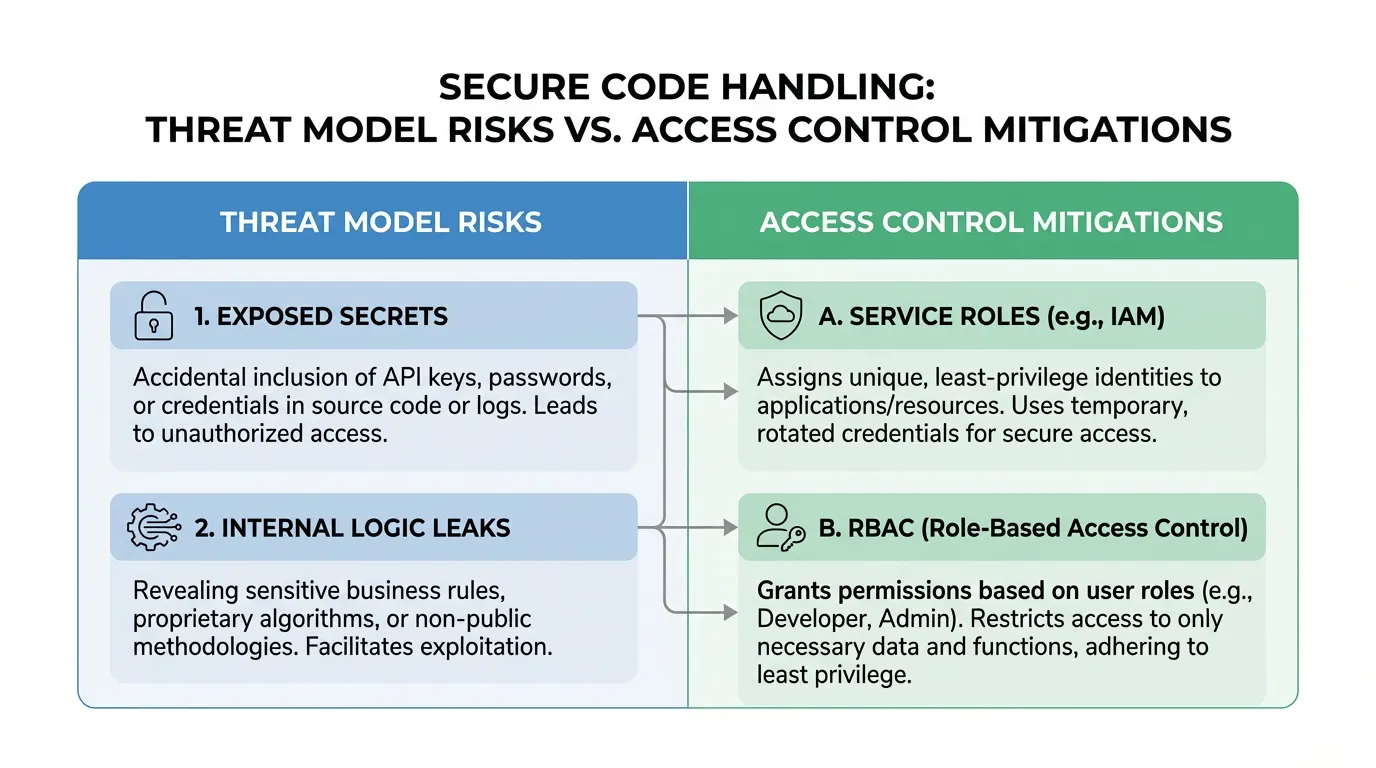
Threat model and assumptions
Start with a clear threat model. Assume code access can expose secrets, internal logic, or customer data.
Data handling lifecycle
Secure handling starts at ingestion and ends at deletion. Document how data is collected, stored, and removed. If your team needs a reference, keep it in docs.
Access controls and auth
Access should be role-based, explicit, and auditable. Tie permissions to team roles and review them regularly.
Example (hypothetical): Access to a private repo is limited to a service role and reviewed monthly, reducing exposure risk.
Encryption and storage
Data should be encrypted in transit and at rest. Storage should be scoped to the smallest set of systems required.
Compliance and audits
If your organization requires compliance checks, build them into the workflow. Align with internal policy and the guidance in security.
Example metrics to track
| Metric | What it tells you | How to measure | |---|---|---| | Access review completion | Governance health | Percent of access reviews done on time | | Sensitive data exposure | Risk level | Incidents involving private code | | Retention compliance | Policy adherence | Data deleted on schedule |
FAQs
What is the minimum control set?
At a minimum you need access controls, encryption in transit and at rest, and a clear retention policy.
How do I handle contractor access?
Use limited time access, scope permissions to the minimum required, and review access after the engagement ends.
Summary and next step
Key takeaways:
- Least privilege and audits are essential.
- Define the data lifecycle clearly.
- Continuous reviews reduce exposure risk.
Ready to apply this? Try for free.
Ready to give SotaDocs a try?
A security-focused overview of how private code should be handled in documentation tools and the controls SotaDocs emphasizes.