How Context-Aware Docs Reduce API Call Errors (and Why It Matters)
See why API calls fail with agents, how context-aware docs fix root causes, and the steps to measure impact.
- api-errorsdocumentationcontextai-agents
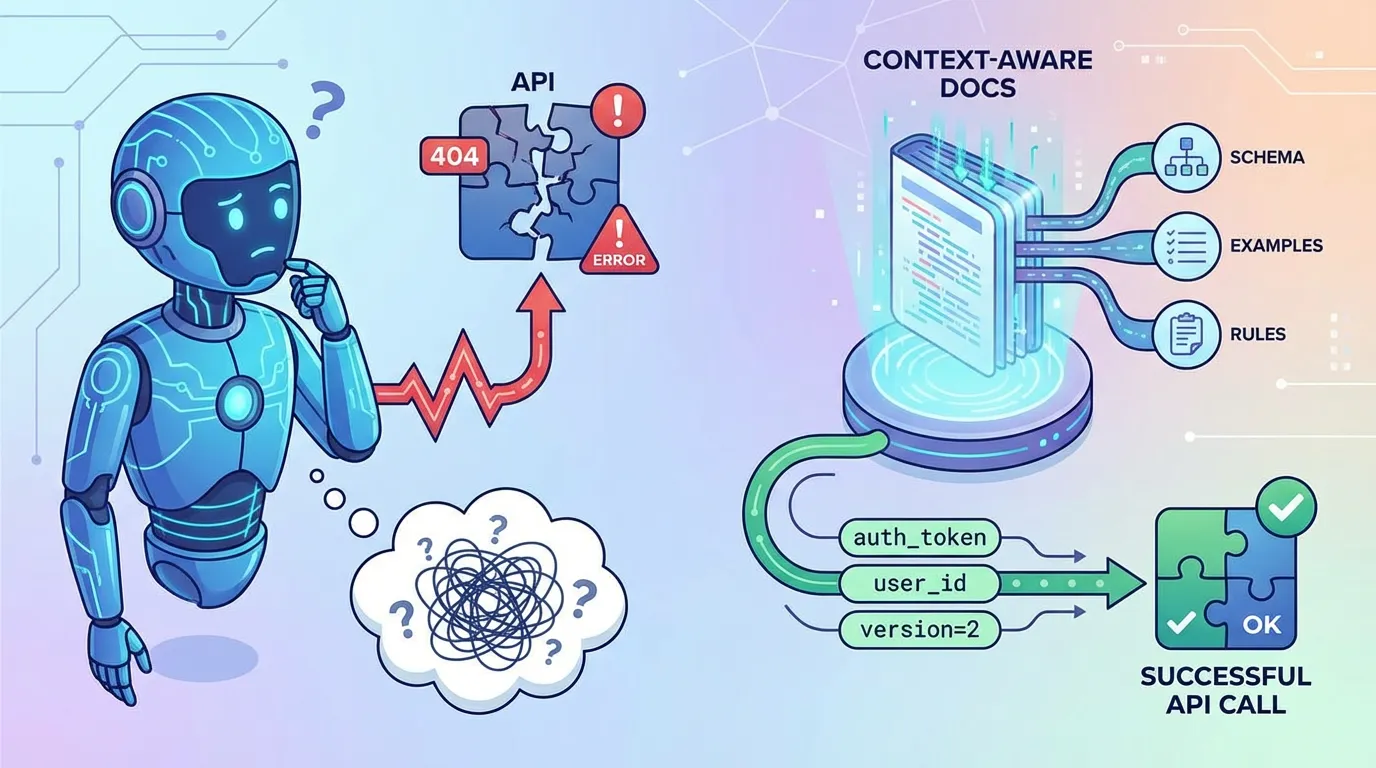
Errors in API integration often stem from a simple source: the agent doesn't know the rules.
This guide explains why API calls fail, how context-aware docs fix the root causes, and how to measure the impact.
Direct answer: API errors from agents usually trace back to missing or stale documentation. Context-aware docs fix this by providing exact parameters, versions, and examples that retrieval can find reliably. Track error rates and time to fix to prove the impact over time.
Why API calls fail with agents
Agents fail when they lack exact parameters, required headers, or current versions. They fill gaps with guesses and produce invalid calls.
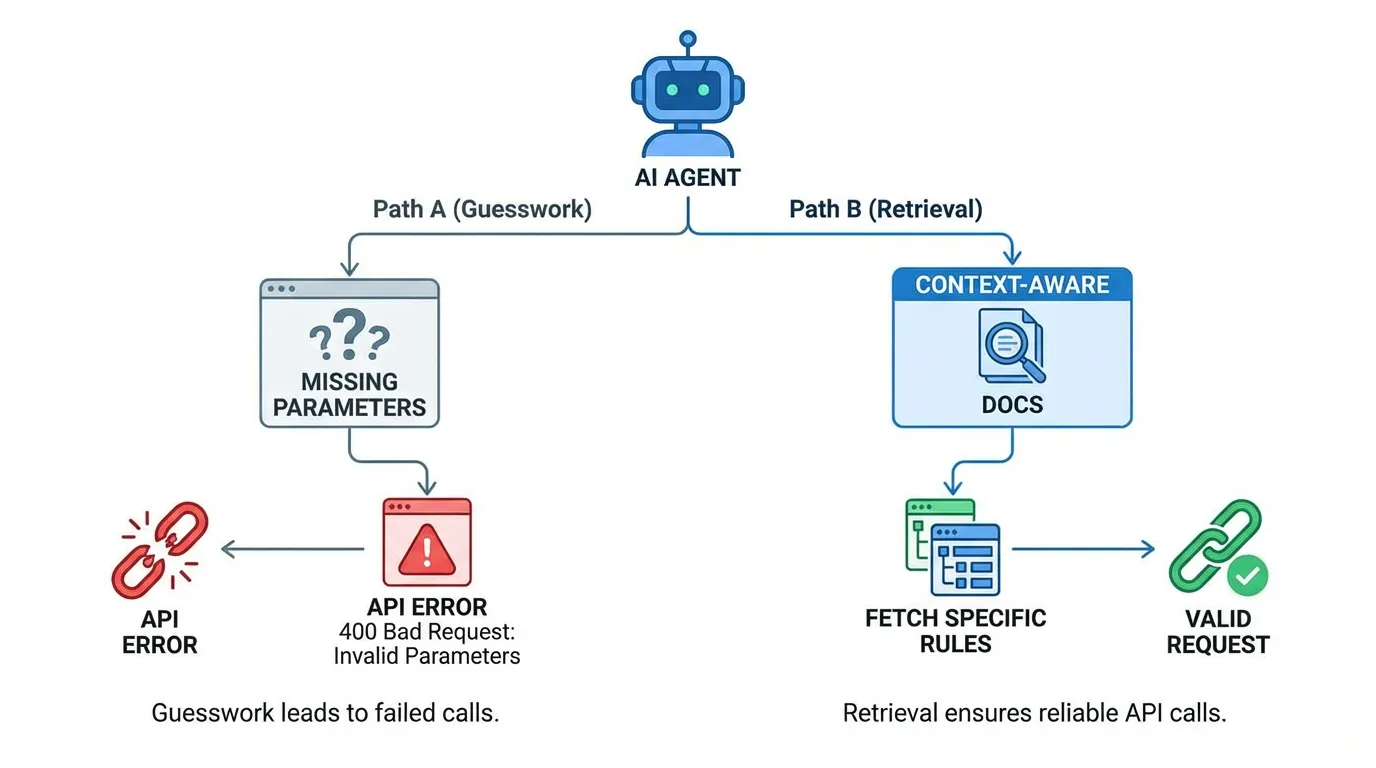
How context-aware docs fix the root causes
Context-aware docs provide exact names, required inputs, and clear examples. They reduce ambiguity and make retrieval accurate. A stable docs hub is the foundation.
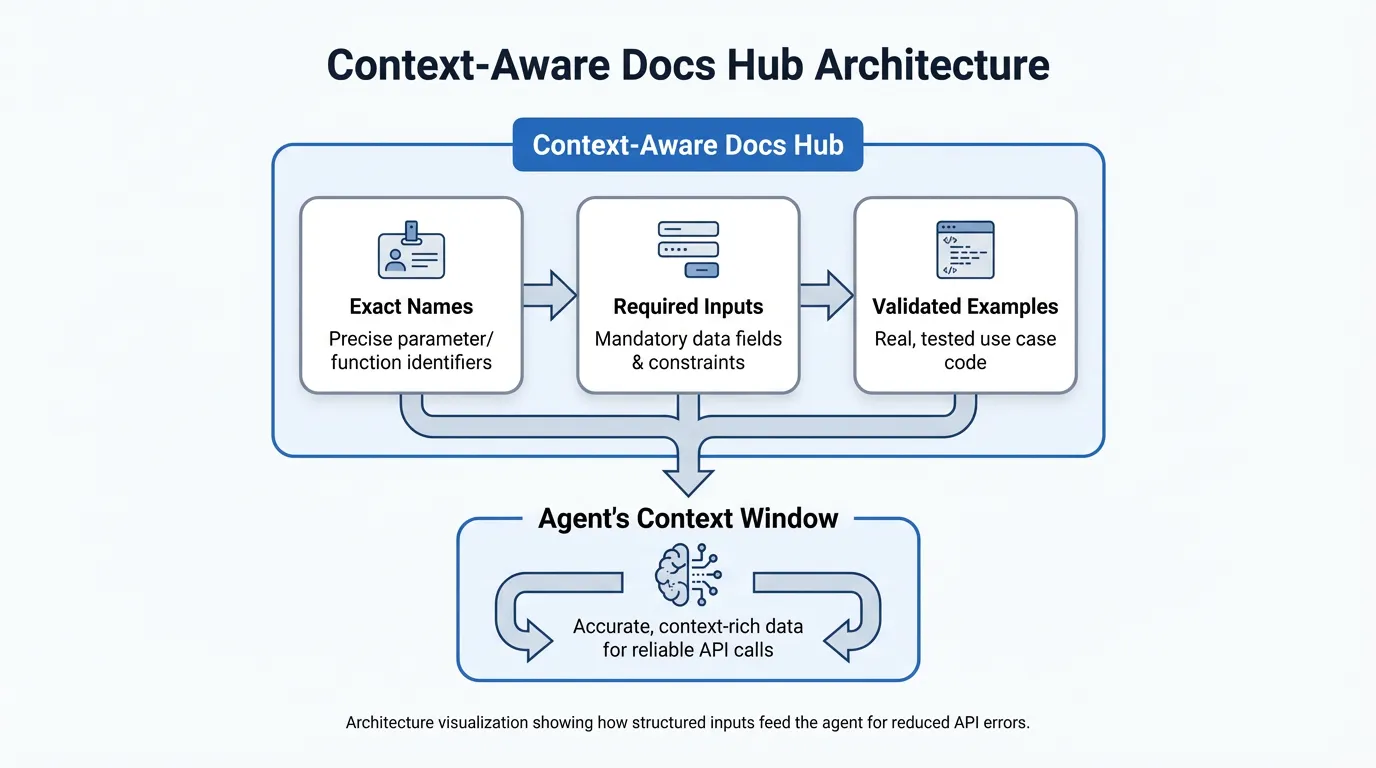
A practical before and after
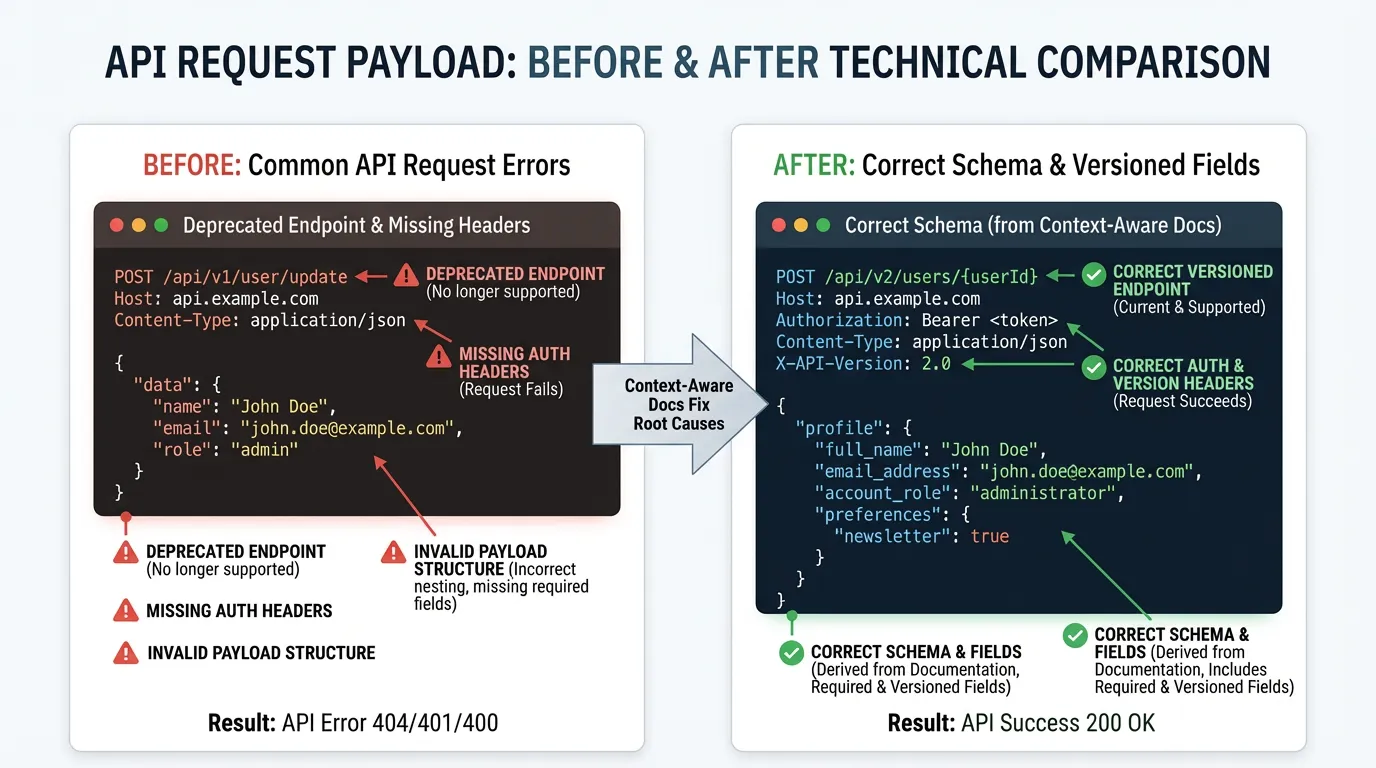
Before: the agent calls a deprecated endpoint and misses required auth headers. After: the agent pulls the current API reference and uses the correct fields. The difference is the source of truth, not the model.
Example (hypothetical): Before, the agent omits a required header. After adding a versioned example in docs, the agent includes it consistently.
Implementation steps
- Centralize API references and mark versions.
- Add clear examples for common calls.
- Link related guides from integrations.
- Validate examples during releases.
Measuring the impact
Track error rates and time to fix. Use benchmarks to see if changes reduce failures.
Example metrics to track:
| Metric | What it tells you | How to measure | |---|---|---| | API error rate | Failure frequency | Invalid call count / total calls | | Time to fix | Cost of failures | Hours from error to resolution | | Support tickets | Downstream impact | Tickets tied to API misuse |
FAQs
Do I need full pack for every API call?
No. Use full pack for high risk or complex calls, and summary for simpler tasks with stable interfaces.
What is the fastest fix for API errors?
Add a versioned example with exact parameters and required headers. Make sure retrieval pulls that example first.
Summary and next step
Key takeaways:
- Missing context is the root cause of API errors.
- Exact docs and examples reduce failures.
- Measure error rates and fix time to prove impact.
Ready to apply this? Try for free.
Ready to give SotaDocs a try?
See why API calls fail with agents, how context-aware docs fix root causes, and the steps to measure impact.