AI Coding Agents in 2026: A Complete Overview
A practical overview of coding agents in 2026, what they do well, where they fail, and how teams should adopt them.
- ai-agentscoding-agentsdeveloper-toolsworkflow
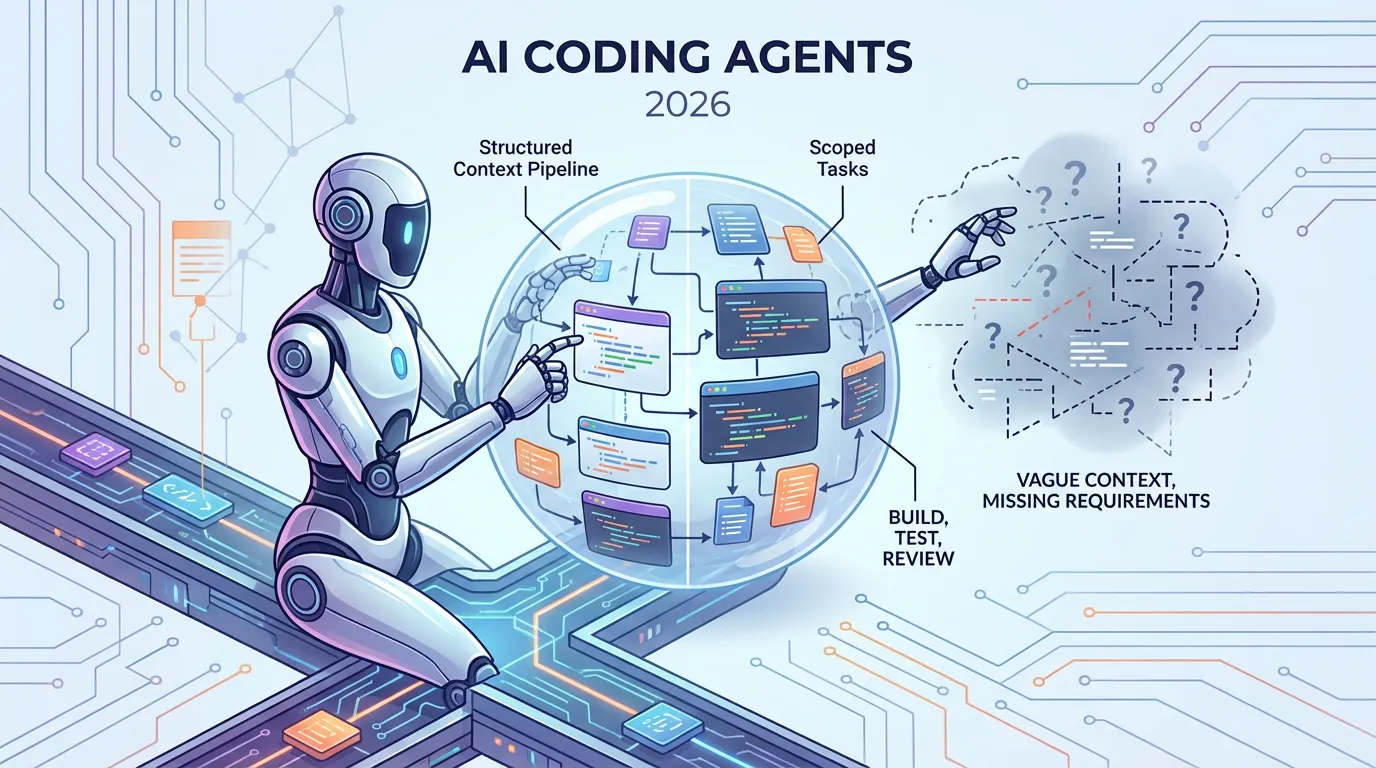
The landscape of AI coding agents has changed rapidly.
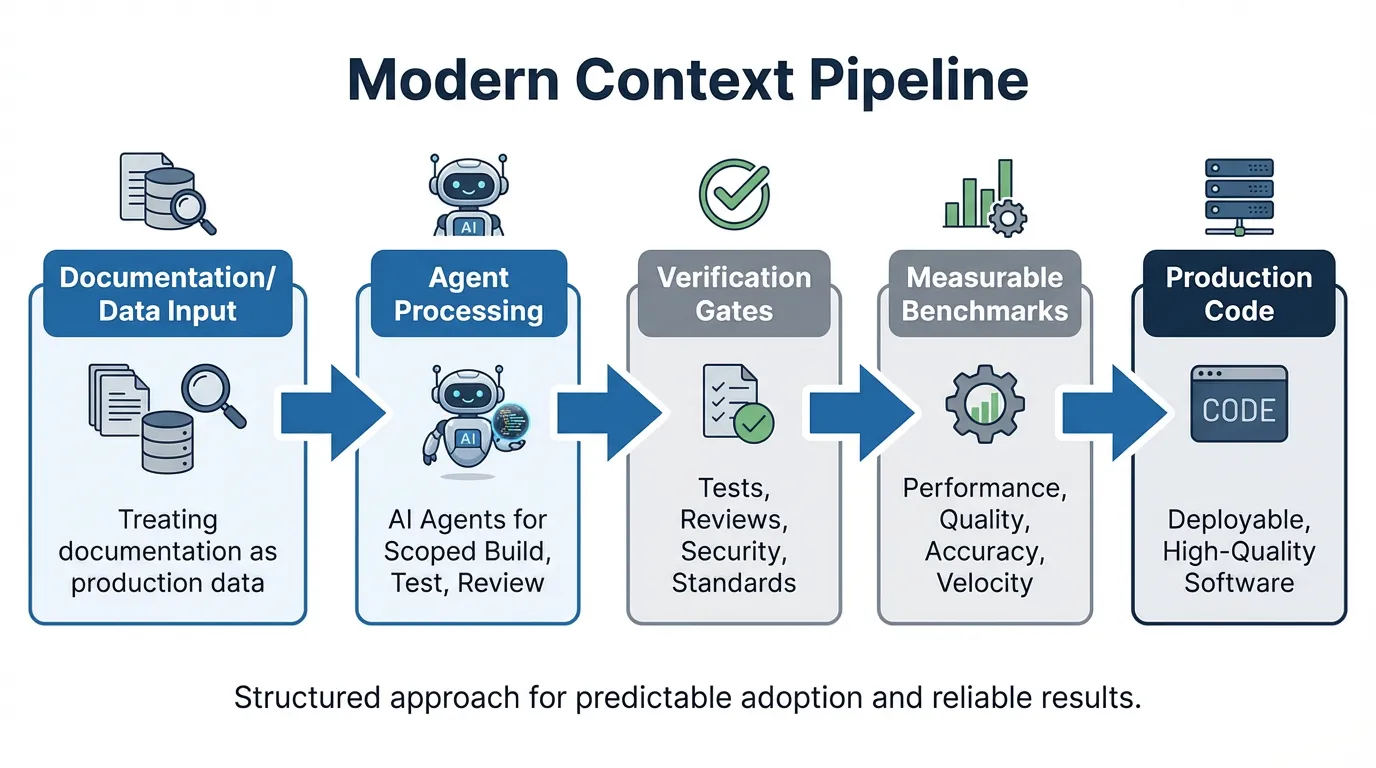
Instead of ad-hoc prompting, modern teams are moving toward structured context pipelines that treat documentation as production data.
Direct answer: In 2026, coding agents excel at scoped build, test, and review tasks, but still fail when context is missing or requirements are vague. Teams get the best results by pairing agents with clear docs, verification gates, and measurable benchmarks. That makes adoption predictable instead of chaotic.
What changed in the last 12-18 months
Three shifts made agents more practical: better tool calling, better context pipelines, and clearer evaluation frameworks. These changes reduced trial and error, but they also raised the bar for clean, current documentation.
Categories of coding agents
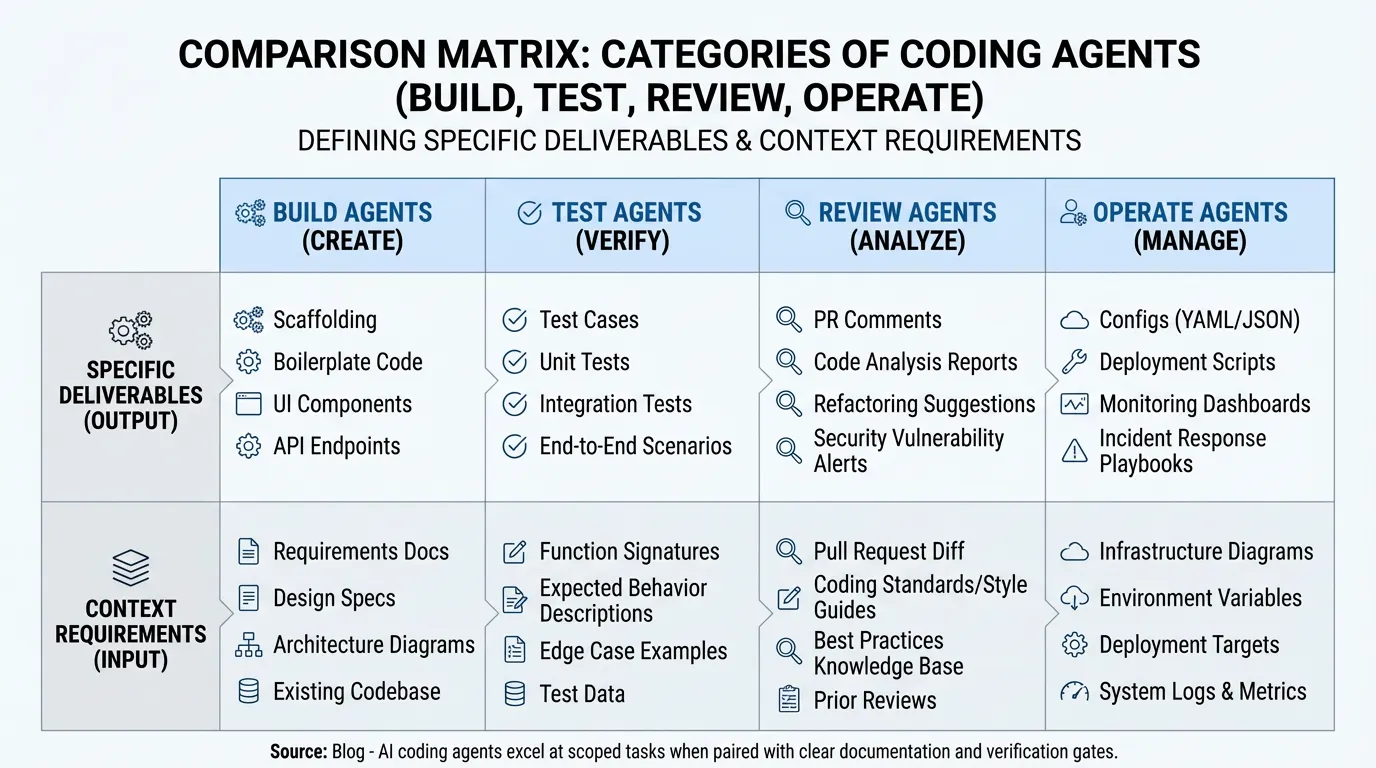
Agents specialize by task. Knowing the category helps you set realistic expectations.
Build
Build agents scaffold features, refactor modules, and generate working code when the requirements are clear.
Test
Test agents generate test cases, fill gaps, and improve coverage when they can see the code and expected behavior.
Review
Review agents look for style issues, security problems, and logic mistakes. They are useful for baseline checks.
Operate
Ops agents help with config, deployments, and runbooks. They require high trust in environment context.
What they do well today
Agents excel at repetitive and well-scoped tasks. They can summarize codebases, propose diffs, and generate boilerplate quickly. The best results happen when the agent can see a canonical source of truth in docs.
Where they still fail
Agents still fail in three common areas: missing context, ambiguous requirements, and weak verification. These failures show up as incorrect APIs, wrong assumptions, or changes that do not match the intent.
Build vs buy decision points
Buying a platform saves time but requires trust in its security and integration model. Building gives flexibility but demands internal ops. Use a checklist that covers integration needs, security, and workflow fit before you decide.
Adoption playbook for teams
Real-world case: A fintech team recently used agents to migrate 400 microservices from Node 18 to Node 22. By feeding the agent a curated migration rulebook and using automated linting loops, they reduced manual effort by 85% while maintaining a 100% build pass rate.
Start small and define success before scaling.
- Pick one workflow and track outcomes.
- Publish a single source of truth for inputs.
- Add verification gates such as tests and type checks.
- Measure results with a baseline like benchmarks.
The next 12 months
Expect more agent-native tooling, richer context pipelines, and tighter QA loops. Teams that invest in documentation quality and evaluation will pull ahead.
Example metrics to track
| Metric | What it tells you | How to measure | |---|---|---| | Task success rate | Overall reliability | Passed tasks / total tasks | | Rework rate | Cost of failures | Tasks needing manual fixes | | Review time | Throughput impact | Average time to approve outputs |
FAQs
Which tasks are best for a first rollout?
Start with scoped tasks like tests, lint fixes, or small refactors. These are easy to verify and show clear wins without high risk.
How do teams measure ROI from agents?
Track task success rate, rework time, and review time. If those improve without increasing incidents, you have a positive return.
Final Verdict: 2026 Adoption
| Focus Area | Current Strategy | |---|---| | High Value | Tests, Documentation Sync, API Migrations | | High Risk | Infrastructure Config, Core Logic Rewrites | | Success Gate | 100% Context Accuracy + Human-in-the-loop |
Stop treating agents as magic and start treating them as part of your CI/CD pipeline.
Ready to test your agent's accuracy? Try for free.
Ready to give SotaDocs a try?
A practical overview of coding agents in 2026, what they do well, where they fail, and how teams should adopt them.