Advanced Blindspot Detection: Finding Gaps in Model Knowledge
Learn how to detect model blindspots using probes and coverage mapping, then prioritize and fix the highest impact gaps.
- blindspot-detectionevaluationai-agentscontext

Blindspots are areas where a model or agent consistently fails because it lacks the right context. If you can detect these gaps early, you can fix them before they cause real damage.
This guide explains how to detect blindspots, prioritize fixes, and validate improvements.
What is model blindspot detection?
Model blindspot detection is the systematic identification of knowledge gaps where an AI agent lacks the context or updated documentation to perform a task correctly. By mapping an agent's likely knowledge cutoff against live source data, developers can proactively "patch" these gaps with fresh context to eliminate hallucinations.
What a blindspot is
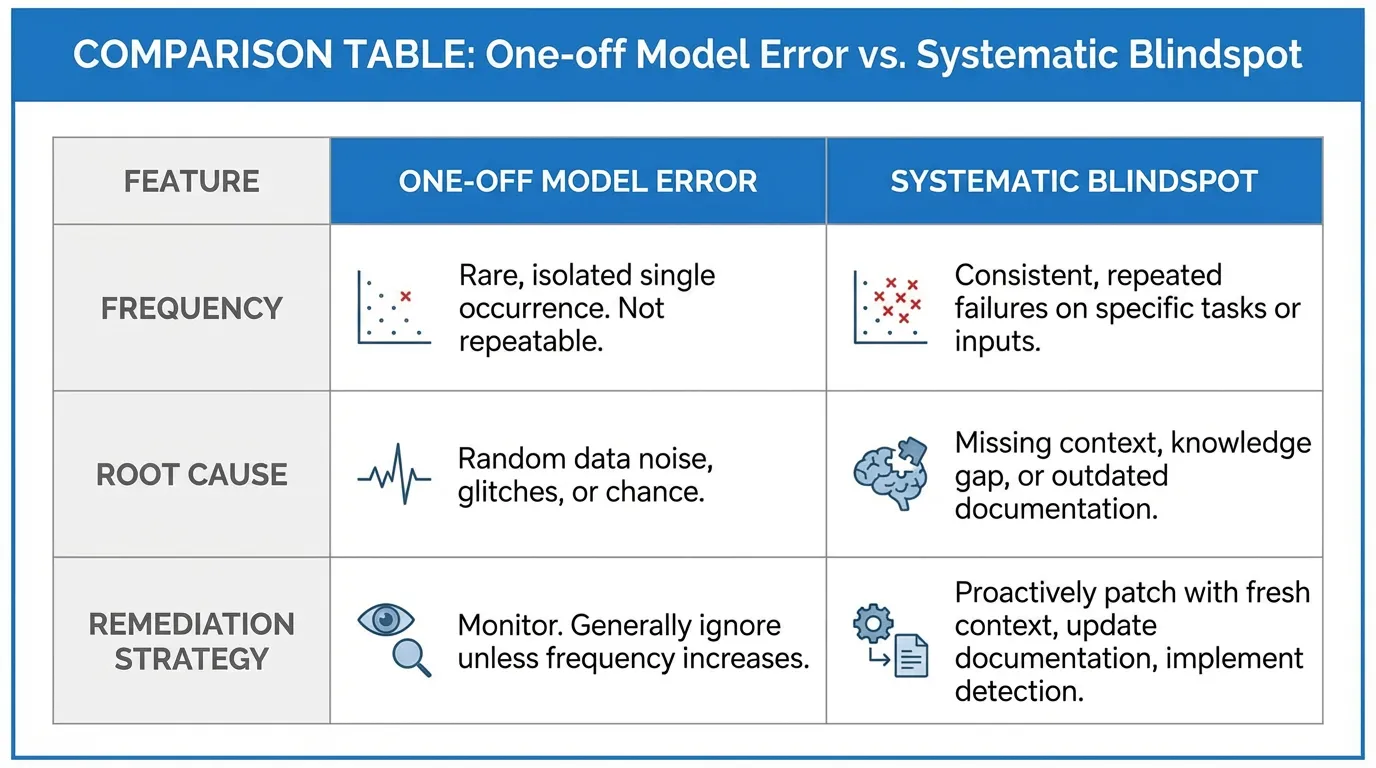
A blindspot is not just a mistake. It is a systematic gap in the model knowledge or available context. It repeats across tasks.
Signals that reveal blindspots
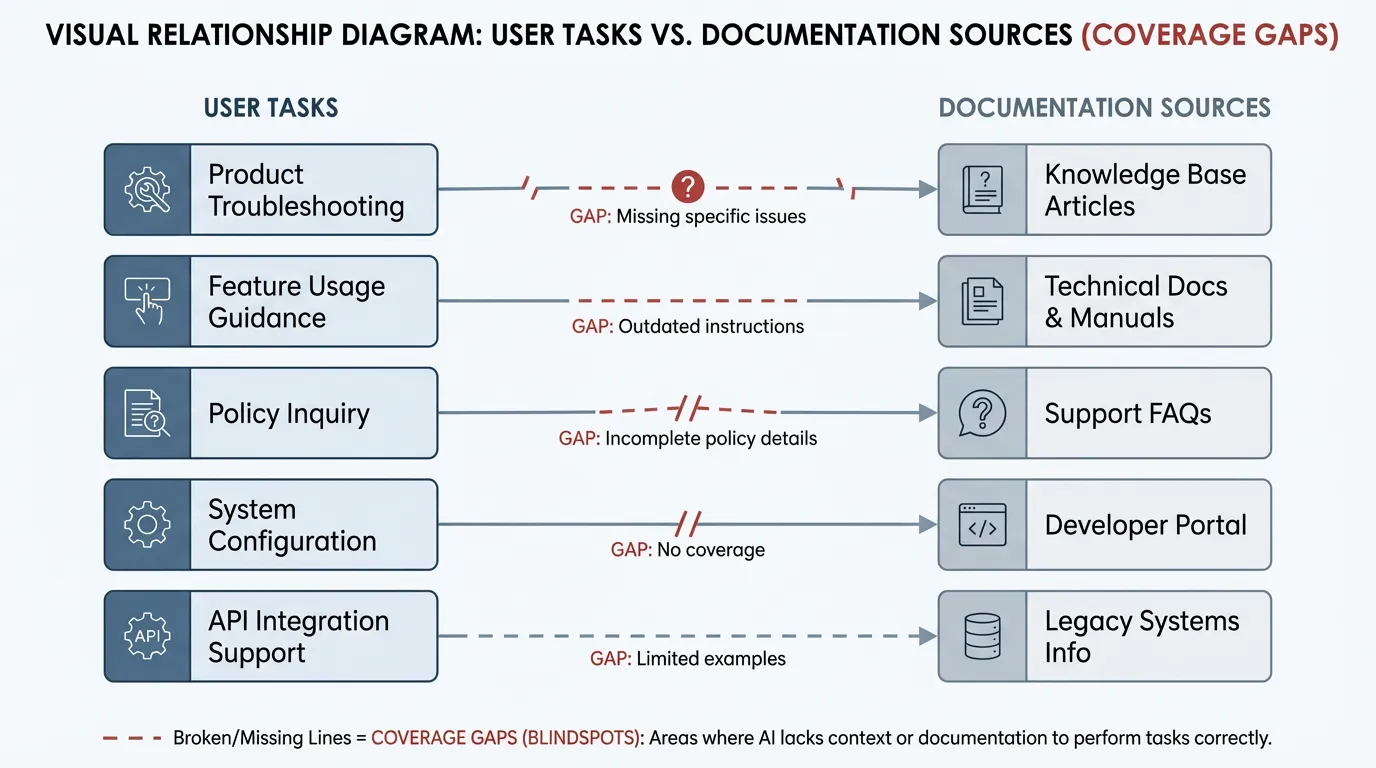
Repeated errors on similar tasks are the strongest signal. Another signal is a mismatch between the docs the agent uses and the actual source of truth.
Detection techniques
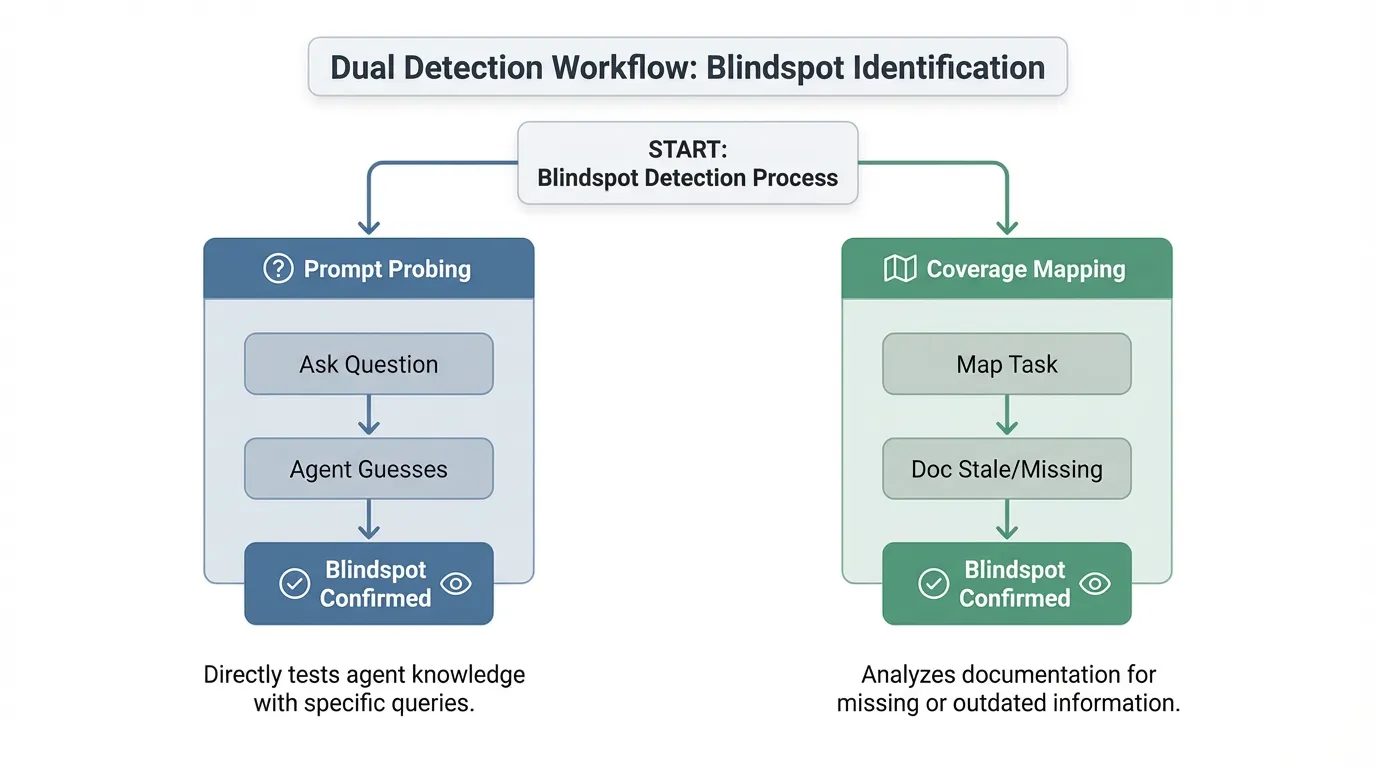
Use two complementary approaches.
Prompt probes
Ask targeted questions that reveal whether the agent knows the required constraints. If it guesses, you have a blindspot.
Coverage mapping
Map tasks to the docs they require. If coverage is missing or stale, the blindspot is real. Start with your docs.
Example (hypothetical): Probe prompts reveal the agent cannot answer questions about a new endpoint, so the missing doc page becomes the top priority fix.
Prioritizing gaps
Fix the gaps that cause the most failures or pose the highest risk. Use benchmarks to identify high impact areas.
Remediation and validation
Update documentation, add examples, and verify with repeat tests. If the blindspot affects sensitive data, align with security.
Example metrics to track
| Metric | What it tells you | How to measure | |---|---|---| | Blindspot recurrence | Whether gaps persist | Repeat error rate on same task | | Coverage score | Docs coverage for tasks | Percent of tasks with source of truth | | Fix validation rate | Effectiveness of fixes | Pass rate after updates |
FAQs
How often should I run probe prompts?
Run probes on critical workflows after each major change and on a regular cadence for core tasks.
What should I fix first after finding blindspots?
Fix the highest impact gaps tied to production workflows or customer facing tasks. That delivers the largest quality gains.
Summary and next step
Key takeaways:
- Blindspots are repeated context gaps.
- Probe prompts and coverage mapping expose them.
- Fix the source of truth and validate the change.
Ready to apply this? Explore our blindspot detection tools, check our latest benchmarks, or try for free.
Ready to give SotaDocs a try?
Learn how to detect model blindspots using probes and coverage mapping, then prioritize and fix the highest impact gaps.